Why would the proof be in the pudding? That's what I asked myself today. Turns out, it’s actually a modern take on the old proverb: “the proof of the pudding is in the eating” In other words you don't know something is good until you've experienced it.
So what do we consider as proof of good creative work?
For a long time, the answer felt fairly straightforward. If something was exceptionally crafted, flawlessly executed and seemingly effortless, we could confidently assume that it had been made by someone with a certain level of expertise and that care and intention were a part of the process. The work itself was the proof. Technology is lowering the barrier to entry in creating, and no, I don't think that’s a bad thing. Democratizing creativity is something worth celebrating. But, when polished execution becomes a baseline rather than a differentiator, polish alone stops proving very much. Maybe that's why we've become so fascinated with the process. We want to see the seams, the work before the work. Not because we crave sloppiness, but because we need proof a human was here. That someone made deliberate choices and shaped the outcome with intention.
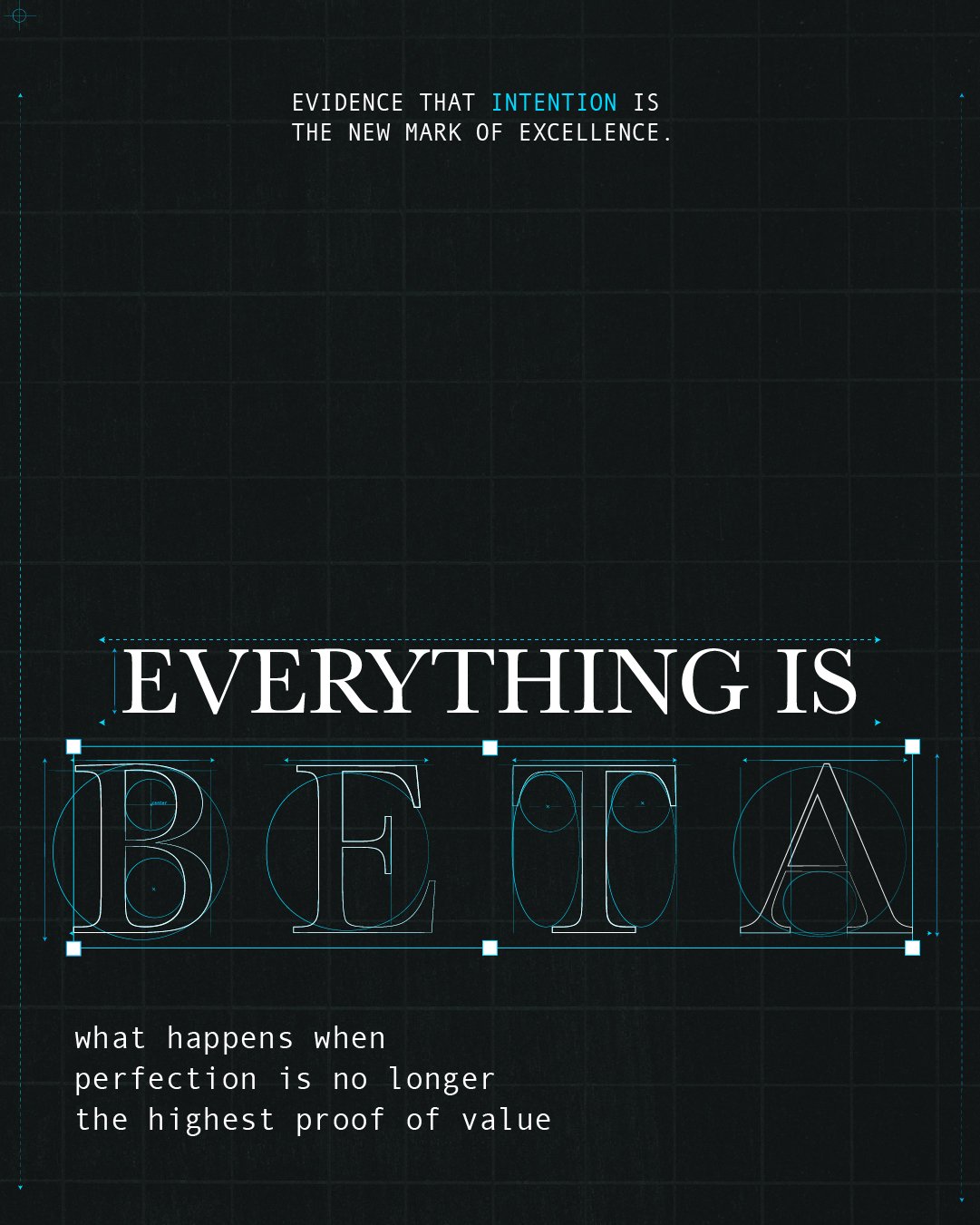
That’s what Everything is Beta explores: what happens when perfection is no longer the highest proof of value. As technology makes polished outputs easier and faster, value is shifting. The work that resonates isn't simply well made, it’s work shaped by clear intention, thoughtful judgement, and a distinct point of view. Experiential has long equated excellence with seamless execution. But if polish alone no longer proves as much as it once did, perhaps the physical world gives us new ways to reveal the process behind what people experience. Throughout this issue, we’ll explore what that shift means for creativity, craftsmanship, and how experiential can evolve in a world where evidence of intention is becoming a new mark of excellence.