
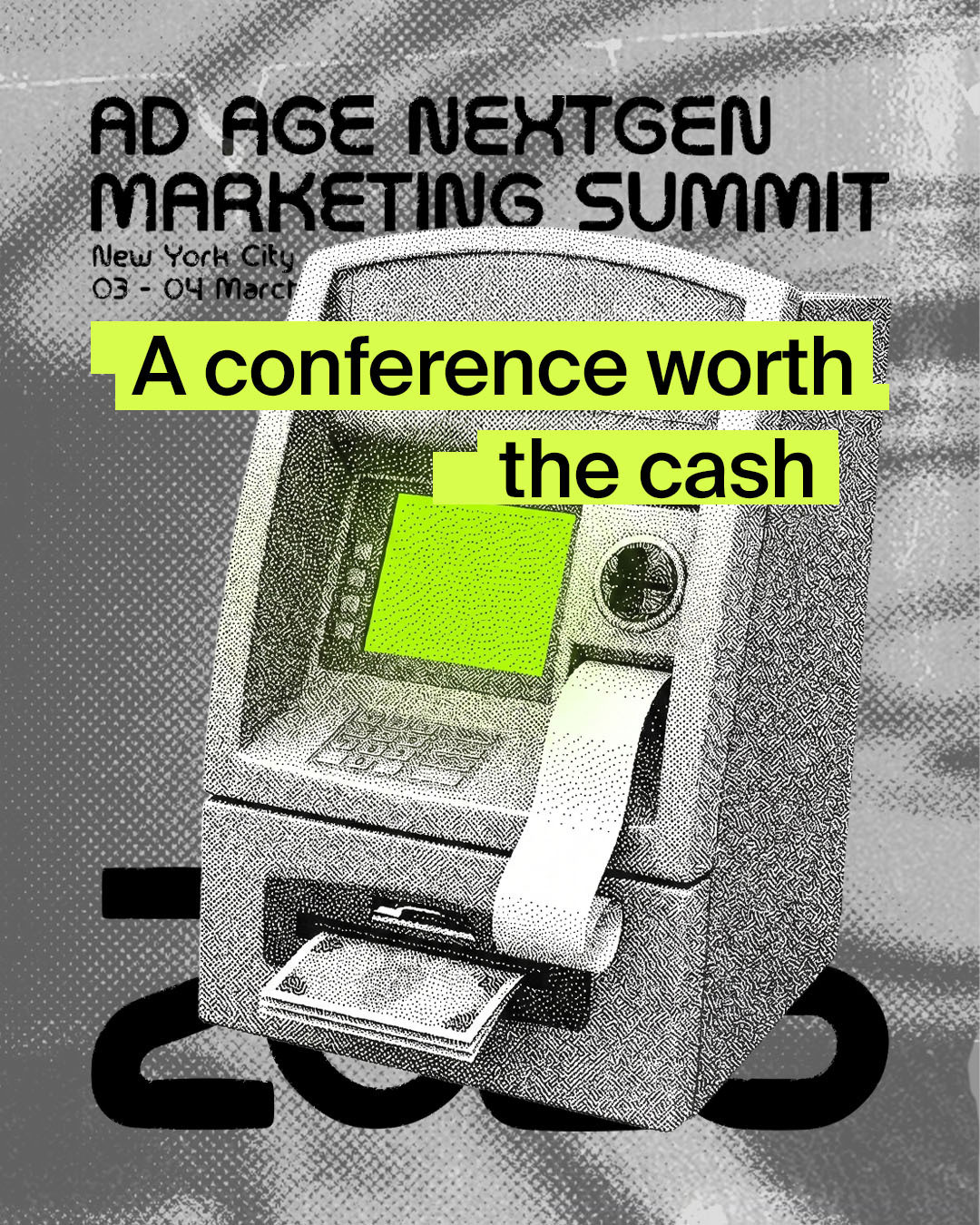
If you missed the Ad Age NextGen Marketing Summit this year, I've got you covered. Last month, I attended the Ad Age conference in New York, where brand leaders, agency strategists, and founders of all ages gathered to chat about what's really working when it comes to reaching younger audiences. Going in as a Gen-Zer myself, I'll admit I was a bit skeptical about how poignant the information would be. But the caliber of the speakers and the relevancy of the topics genuinely surprised me. From Gap's CMO, Fabiola Torres, to co-founders of a Gen Alpha skincare line, to Gen-Z creators, there were some interesting themes that continued to re-surface across various perspectives.
Here are the five biggest patterns I noticed throughout the summit, and why you should care.
1. Bring Young People in the Room:
Including young people in the convo came up in many panels, spanning completely different categories. Sincerely Yours, a Gen Alpha skincare brand, has a teen advisory board of about 30 people that meets quarterly. They also have a text-only community of roughly 70,000 young consumers they can poll directly. The NHL has its own youth advisory board made up of 13-17 year olds who they meet with twice a month. On the agency side, Gia Lee, Co-Founder of Gen-Z led social agency NinetyEight, shared that her team stays connected to their audience through a research community called The Koi Pond. It is a dedicated space for ongoing conversations with young consumers that directly shape their client work.
What all of these brands and agencies had in common was a commitment to creating real ways to hear from young consumers and actually using what they learn. MAS recently started leaning into this as well, pulling in Gen Z team members and Residents (AKA interns) to pressure-test new ideas and challenge assumptions.
2. Niche > Broad Reach.
Another clear theme at the summit: The Goat Agency made the case that it's more impactful to get it exactly right with one niche audience than to water down your message trying to reach several at once. They advocated for micro-influencers over bigger names because they feel more like a friend to their followers, which makes them more trusted and more memorable. Scott Donaton, SVP of Global Brand for Crunchyroll, the top anime streaming service, summed up their whole philosophy in one line: "We are not for everyone, but everything for someone." Topicals' founder, Olamide Olowe, even told a memorable story: when new customers came in after a viral brand trip and said the products didn't work, she got on TikTok Live and explained that Topicals is designed for people with chronic skin conditions. She then encouraged those customers to shop from other Black-owned brands instead. Staying true to her core audience and being 100% real ended up paying off.
A quote from Anthony Potero (the mind behind the viral look-a-like contests + Co-founder of the Pufferfish Agency) that really stuck with me was that 100 engaged "true" fans is better than millions of views. Now comes the real challenge for marketers: convincing clients that narrowing focus is an investment in deeper impact, rather than a risk of limited reach.
3. Fandom Runs Deeper than Brand loyalty:
This idea was most explicit in the panel on earning fandom authentically, where marketing leaders at Crunchyroll, Dr. Pepper, Spotify, and the NHL all agreed that traditional brand loyalty and fandom are in very different leagues (no pun intended.) They emphasized that loyalty feels transactional, while fandom is tied to identity, community, and how people see themselves.
A great impromptu case study emerged during this panel about the hit show, Heated Rivalry, which sat at the intersection of three highly engaged groups: romance novel readers, hockey fans, and the LGBTQ+ community. For the NHL, the engagement from the show outpaced the Winter Olympics. Dr. Pepper saw a 66% increase in social engagement for Canada Dry simply because it appeared as a comfort drink on the show. Even Spotify saw a 1500% increase with the audiobook on the platform.
You can't plan for that kind of crossover, but you can position your brand to benefit from it when it happens. Donaton from Crunchyroll noted that anime has gone from subculture to global culture, with over a billion fans worldwide, and their job isn't to create new fans, but to earn their place in fans' lives. Spotify echoed that same thinking by providing tools like lyrics, co-creating playlists, and album countdowns to allow fans to gig deeper into the music they love.
In another session, Topicals' Founder, Olowe, talked about growing up with streetwear brands and wanting people to feel so connected to Topicals that they'd wear it on a hoodie. On the Gen Z marketers panel, Teddy Stratis from KIND Snacks talked about timing a new product campaign featuring The Traitors winner Rob Rausch around The Traitors reunion, tapping into an existing fan moment rather than trying to create one. There is a delicate balance to strike when tapping into a fandom. It's important for marketers to be strategic and well-intentioned when targeting fans to ensure the brand's involvement doesn't feel forced.
4. AI Meets Authenticity:
Of course, AI was a part of the conversation. The speakers on the "What Gen Z Marketers Really Think" panel said it best: AI-generated content often looks cheap to Gen Z, and they want brands to be transparent about when and how they're using it. However, the authenticity conversation was bigger than just AI.
Gap's CMO, Fabiola Torres, talked about partnering with Katseye for their viral denim campaign months before the group blew up. Instead of making a reactionary move based on a trend, they took a genuine bet on the group. The social network for athletes, Strava's CMO worked with Renee Rapp because she has a real personal journey with fitness, rather than just picking a fitness influencer. During the creator simulator workshop, we learned that the biggest red flags in a brief are anything that tries to script what should feel natural. Gen Z panelists said they appreciate art, human touch, and work that clearly came from a real person with a real perspective.
This generation has seen enough performative marketing to know the difference between a brand that's being real and one that's trying to look real. The important distinction here is that AI use is not the issue itself, but how it's being used and how that usage affects the originality of the work being presented.
5. IRL is Here to Stay:
I may be biased, but this was the biggest through line, and it didn’t just come from the panel about touching grass. Coach is opening cafes globally and seeing Gen Z spend 7-8x more time in their stores as a result. Strava's run club culture has exploded, with over a million clubs on the app and a massive increase in IRL connections that started digitally. Crunchyroll talked about the hunger for in-person gathering being way up post-pandemic, whether through cosplay, viewing parties, or conventions. Yondr, a company creating phone-free spaces, said people are actively craving environments where devices aren't welcome. A speaker at the digital fatigue panel noted that in contrast with the minimalism that defined millennial culture, 70% of Gen Z wants to collect physical things.
The summit's own closing takeaway, delivered by Ad Age's Editor-in-Chief, Jeanine Poggi, was to lean into IRL events. As an experiential agency, the swing back into IRL is something we at MAS don't just feel, it's something we know deeply. Having a dedicated panel about digital fatigue, seeing IRL come up in most sessions, and then hearing it from Poggi herself was validating. It reinforced that the work we do is both relevant and necessary.
The NextGen Marketing Summit reinforced that connecting with younger audiences isn't solely chasing the latest platform or trend. Whether it’s giving your audience a real voice, having the confidence to go niche, or investing in IRL experiences–be intentional about how you show up.
My initial skepticism was met with incredible anecdotes from peers, a refreshed perspective, and overall, feeling inspired about the future. If you work in marketing and want to stay sharp on how young people are reshaping the industry, this summit is worth your time. I’m excited to see how things take shape at next year's conference!