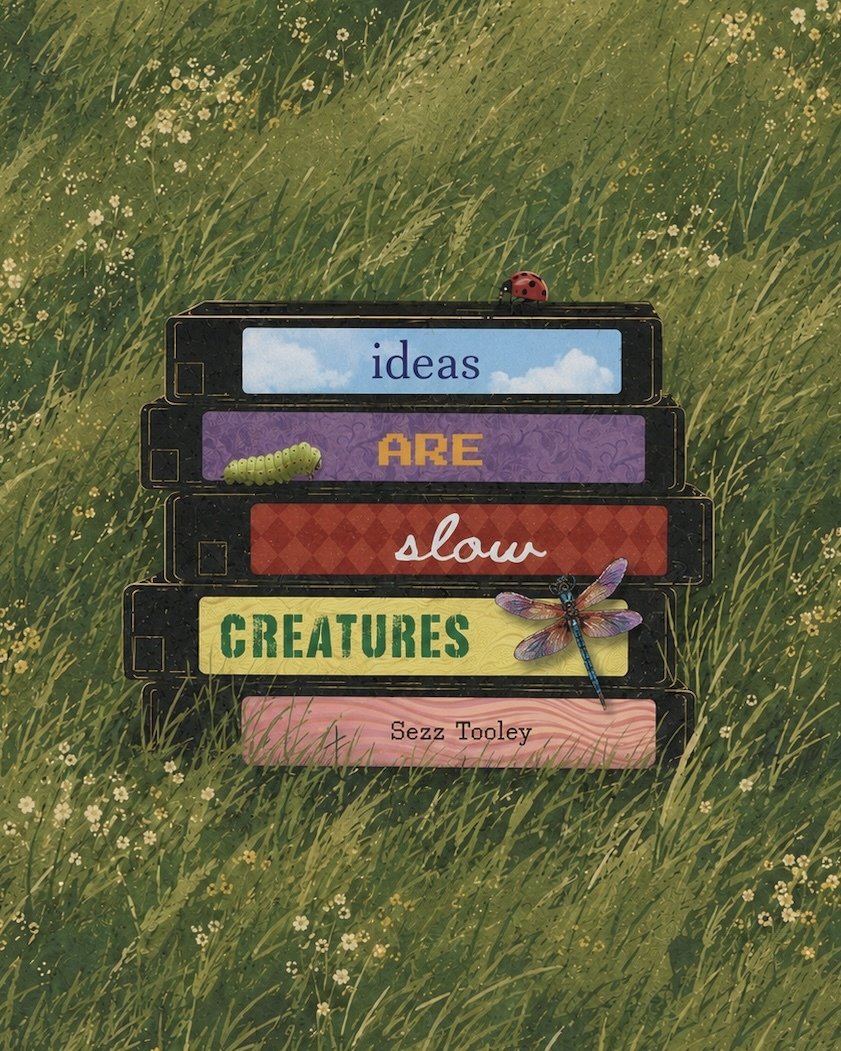
Do you remember when you were a kid? Greens in the grass were so bright it beckoned us below to the invisible world of insects under its dewy blades. Time seemed to move slower, painfully so, as the school clock ticked the day away or dinner cooked in the oven. As a child with endless imagination fueled by fresh neurogeneration, ideas were boundless: one moment could be spent flying through the clouds as a jet pilot and the next moment fighting a dragon as a knight in shining armor. Experiencing everything for the first time, slowly cataloguing life’s little treasures, time seemed to be vastly infinite.
As we grow and gather unique experiences we tend to age out of perceiving the slow and steady. Sometimes, as adults, the seemingly never-ending tasks and responsibilities overtake our senses, drowning the connection to childhood whimsy and imagination. This is only amplified by the exponential advancement of technology, especially to those who were children between the years of 1990 and 2010. The nostalgia is potent for Millennials and Gen Z with pixelated adventures and dial-up images scattered throughout their childhood memories. This infrastructure required patience and meditative slowness to accompany it; deferred gratification as one physically interacted with the medium. I personally have many fond memories of rewinding cassettes and VHS tapes as a youngin’. For this age group, the nostalgic connection to physical media becomes an escape from the fast-paced, contemporary landscape we find ourselves in today. The human perception of time being slowly outpaced by technology has an unwelcome side effect of attention deficits, anxiety, and seemingly society-wide cultural malaise. Young adults increasingly find it hard to rest and relax in the chaos of the attention-economy, their creativity and ingenuity squashed under the weight of responsibilities. Even if the drive to create is present, the ideas feel blocked, forced. In the face of this creative constipation (pardon that mental image), it is crucial to remember that ideas, themselves, are slow creatures; their life-cycle supported by the slow burn of imagination.
In a perfect world, art is a living, breathing entity which is given time, space and friction to evolve. Creativity thrives in the face of adversity when the idea overcomes various challenges, synthesizing into a stronger, more developed identity. But in our increasingly rapid, results-driven economic landscape, the pace of this production has also evolved. Musicians who produce full-length albums routinely undertake long and arduous artistic processes, nurturing ideas by collaboration as they approach publishing. From the inception of recording arts, the process of capturing sound in a physical playback medium such as wax, vinyl, or tape necessitated this slow burn creative approach. Vinyls were discarded and re-recorded and 8-track tapes were physically cut and re-attached to compile their best vocal takes. Every part of the process was tactile, slow and needfully intentional. As accessibility to music production increased the era of the bedroom producer began. While this is a huge win for those who did not have an easy way into the music industry before, a dark side unfortunately emerged. Singles are hyper-prioritized to gain continuous engagement with the “product”. Music is produced with short hooks designed to capture attention in 6 seconds or less. And while this issue is not only present in the current music scene, it is nonetheless a perfect picture of the mental demands such an environment can place on the creative mind and even the final work. Conversely, even with its many limitations, the era of physical media represents the nature of creativity and the associated merit of letting ideas organically materialize. But how is this concept meaningfully effective in digital 21st century life?
Everyday, we are bombarded with stimuli. Work/life balance can feel unachievable, even as we try to find solace in hobbies and others around us. The demands of being creative in this environment can be immense - an expectation I like to describe as “creativity on tap.” And nowhere is this sentiment more present than in the experiential industry. I’m sure all of us know the feeling of receiving a brand new client project, mind fresh with flowing ideas. But as deadlines change and restrictions to actualizing those ideas arise, creative burnout can slowly creep in. Flexing that creative muscle is so much harder when encountering the frictions that roadblocks can bring. For creativity that can mean physical restrictions to designs. For strategy, it can mean a client rejecting idea after idea. And for technical, it’s almost always the forces of nature rejecting cool AV ideas. Anxiety builds, the creative flow feels mired - a near perfect recipe for burnout. If this feels familiar, the muscles of creative ideation need diversity. Slow burn looks like trusting your process of creativity: taking breaks to breathe, uninterrupted by external mental stimulation. It looks like putting meaningful time into a personal art project, unencumbered by deadlines or client eyes. It looks like persevering when an idea is uncomfortably out of focus. It looks like asking for collaboration with other creative minds, especially to overcome roadblocks. It may even look like starting completely over. But most importantly, it looks like gently nurturing the most sensitive and powerful parts of the mind.
So next time the ingenuity is out of reach, when the ideas refuse to materialize, when the brainstorming session is lacking vibes, or any other number of stresses arise, take a moment to return to a childlike imagination, give yourself a healthy service of patience, and embrace the slow burn.